 Imagup General Magazine 2025

A better shopping mall customer experience does not have to start with demolition, new flooring, or an expensive redesign. Visitors often judge a mall by simpler things:
Can they find a store quickly?
Is there somewhere comfortable to sit?
Are common areas clean?
Can someone help when something goes wrong?
Physical malls still matter. ICSC’s 2025 Post-Holiday Consumer Survey, conducted among 1,013 U.S. adults, found that 75% of holiday shoppers visited a mall or shopping center.
So, how can malls make those visits noticeably better without major renovations? The answer is to remove everyday friction.
Here’s What’s Inside
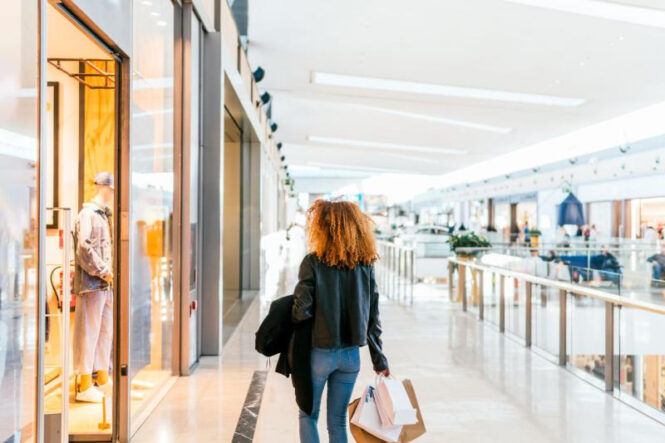
Improving customer experience in shopping malls is less about making every space look new and more about making every visit easier, more comfortable, and more useful.
The strongest low-disruption improvements usually focus on:
- Helping visitors navigate the mall without confusion
- Fixing small comfort and maintenance problems quickly
- Turning unused areas into useful temporary spaces
- Giving staff better information to help customers
- Using digital tools only when they remove friction
- Tracking visitor feedback before deciding where to spend
The good news? These changes can often be tested in one corridor, entrance, floor, or customer journey before being introduced mall-wide.
That makes them particularly useful for shopping centers that want measurable improvements now while preserving larger capital budgets for projects that genuinely require construction.
Make Stores and Services Easier to Find
Large malls can become frustrating surprisingly quickly. A shopper enters through an unfamiliar parking level, needs a particular store, cannot see a directory, and starts walking in the wrong direction. Improving that experience does not require changing the floor plan.
Start with clearer physical signs, consistent store naming, obvious floor indicators, and directories positioned where visitors actually make decisions. Digital indoor maps can then add search, routing, and live updates.
For example, Visioglobe provides customizable 3D indoor maps, real-time content updates, wayfinding, accessibility-aware routing, and analytics that can be used across different devices. The platform is designed to help venues update information without rebuilding physical signage every time a tenant or route changes.
The goal is simple: visitors should spend their time shopping, dining, or socializing, not figuring out where they are.
Treat Wayfinding as Part of the Customer Experience
Wayfinding goes beyond putting arrows on walls. It includes directories, landmarks, signs, floor numbering, map design, visibility, and digital guidance that together help people understand a space and move through it confidently.
A study by Chin-Tsu Chen published in Sustainable Futures, Volume 10, in December 2025 examined 500 participants across eight major transit-oriented shopping malls in Taiwan.
Researchers studied how environmental information, wayfinding, crowding, satisfaction, experience, and loyalty interacted. Environmental information was positively associated with customer satisfaction and experience, while wayfinding significantly mediated its effect on customer experience.
Important distinction: Good wayfinding does not encourage visitors to leave faster. It removes unnecessary effort so they can reach the places they actually want to visit.
Check confusing intersections, parking-to-mall transitions, elevator exits, restroom routes, and locations where visitors repeatedly stop to look around.
Fix Small Comfort Problems Before Redesigning the Building
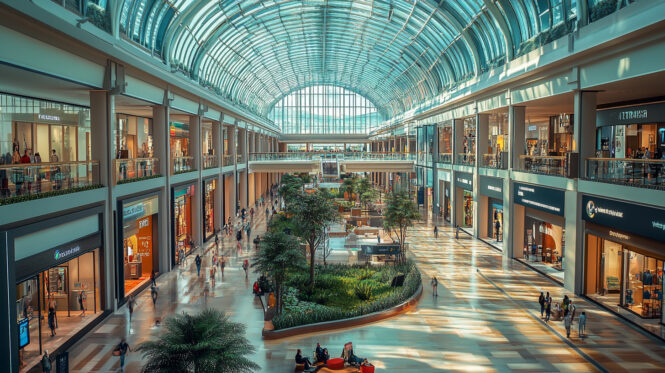
Customer experience can deteriorate through dozens of minor issues that never appear on a renovation plan. A broken charging point, dirty table, uncomfortable waiting area, unclear restroom sign, or out-of-service escalator can affect a visit immediately.
Run regular walkthroughs from the visitor’s perspective rather than evaluating common areas only as facilities assets.
Look particularly closely at:
- Restrooms, entrances, elevators, and escalators during peak periods
- Seating near food, family, and waiting areas
- Temperature, lighting, cleanliness, and noise
- Broken fixtures, doors, signs, chargers, and furniture
- Accessibility routes and obstacles that make movement harder
Prioritize problems by frequency and customer impact. A worn wall in a quiet service corridor may be less urgent than three missing chairs beside a busy food court.
Here’s the thing: people do not experience maintenance and customer service as separate departments. To a visitor, both are simply part of the mall experience.
Turn Underused Areas Into Useful Customer Spaces
An empty storefront or quiet corridor does not always need permanent construction to become useful. Temporary concepts allow mall operators to test what visitors respond to before committing significant money.
| Underused area | Simple improvement | Potential benefit |
| Vacant storefront | Pop-up retailer | Adds novelty and tenant variety |
| Wide corridor | Movable seating | Gives visitors somewhere to rest |
| Empty wall area | Local art display | Creates visual interest |
| Food court edge | Charging station | Makes waiting more convenient |
ICSC reported in July 2025 that shopping centers were using specialty leasing, pop-ups, automated retail, and temporary concepts to activate vacant or underused spaces. The examples included dessert concepts and vending installations designed to turn previously inactive areas into visitor destinations.
Test first. If a concept attracts visitors and supports nearby tenants, expand it.
Give Employees Better Information, Not Just Better Scripts
Even an excellent directory cannot answer every question. Visitors still ask staff where a store moved, which entrance is closest to a restaurant, whether an elevator is operating, or where they can find accessible parking.
The problem starts when employees have outdated or inconsistent answers.
Create a simple shared information system containing current tenant locations, temporary closures, opening hours, event information, accessibility routes, parking details, and common customer-service procedures. Security, cleaning teams, concierge staff, and other frontline employees should be able to access the same information.
Why does that matter? PwC’s 2025 Customer Experience Survey, published September 29, 2025 and based on 5,511 consumers and 406 executives, found that 29% of consumers had stopped using or buying from a brand because of poor customer experience, either online or in person. It also found that 86% considered human interaction moderately or very important to their brand experience.
Technology should help employees solve problems, not replace useful human assistance.
Add Digital Tools Only When They Make Visits Easier
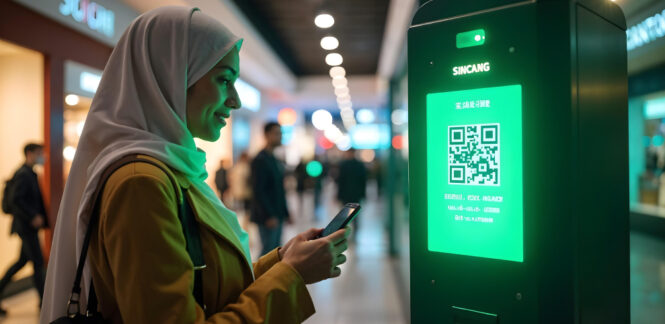
More technology does not automatically create a better shopping mall experience. Nobody wants to download an app, create an account, confirm an email address, and accept notifications simply to find a restroom.
Start with the problem, then choose the tool.
QR codes can open an indoor map or event schedule. Digital directories can show current tenants and temporary closures. Parking systems can help shoppers remember where they left their cars. A mall website can show store locations before visitors arrive.
A useful rule is to ask whether the digital feature removes a step from the customer journey.
Practical example: if scanning a QR code immediately opens a searchable mall map, it may be useful. If scanning it leads to an app-install page before navigation becomes available, many visitors may simply give up.
Digital convenience works best when customers can understand the benefit immediately and use the feature with minimal effort.
Use Customer Feedback to Decide What to Fix Next
Before spending money on a large upgrade, identify where customers are already experiencing friction. Useful evidence may be hiding in customer-service questions, online reviews, maintenance records, map searches, parking complaints, tenant feedback, and recurring comments on social media.
Do not react to one complaint in isolation. Look for patterns.
A Journal of Retailing study published online March 5, 2026 analyzed more than 250,000 online customer reviews in two large-scale studies covering malls in the United States and United Kingdom. Researchers examined sentiment around mall access, atmosphere, cross-store assortment, within-store assortment, and price and promotion.
They found that mall-controlled attributes – particularly cross-store assortment and mall atmosphere – were more strongly associated with satisfaction than tenant-controlled attributes. Higher mall satisfaction was also associated with a higher chance of mall survival.
That gives operators a practical reason to measure recurring experience problems rather than relying on intuition.
Better Mall Experiences Can Start With Small Changes
Improving customer experience in shopping malls does not require changing everything customers see. Often, the biggest opportunity is to remove the small frustrations they encounter repeatedly.
Start with clearer navigation, reliable maintenance, useful seating, informed employees, smarter use of empty space, and digital tools that solve real problems. Then measure whether those changes actually improve the visit.
A major renovation may still make sense eventually, but it should not be the default answer to every customer-experience problem.
Choose one or two high-friction moments first. Fix them well, watch how visitors respond, and use what you learn to decide what deserves attention next.
FAQs
[su_spoiler title=”How can a mall measure customer experience without expensive research?” style=”fancy”] Start with data the mall already has. Group customer-service questions, online reviews, maintenance requests, parking complaints, and digital directory searches by topic. Repeated issues can reveal where visitors consistently encounter friction.[/su_spoiler] [su_spoiler title=”Should shopping malls still use printed directories?” style=”fancy”] Yes. Digital maps can add powerful features, but printed signs and directories remain useful when visitors do not have a phone available, have poor connectivity, or simply prefer immediate visual guidance. The two formats should complement each other.
[/su_spoiler] [su_spoiler title=”What should malls consider when adding charging stations?” style=”fancy”] Placement matters as much as quantity. Charging points should be close to comfortable seating and located where customers can remain without blocking circulation. Operators should also plan for cable wear, electrical safety, cleaning, and regular maintenance.
[/su_spoiler] [su_spoiler title=”How can malls test a new customer-experience idea before rolling it out?” style=”fancy”] Choose one defined area and establish a simple measurement first, such as customer questions, usage, dwell time, or complaints. Test the change for a fixed period, compare results with the earlier baseline, and expand it only if the improvement is clear.
[/su_spoiler]
